



No one should ever be physically violated by a supervisor, coworker, client, or anyone else they encounter through their job.
Sexual assault in the workplace is more than a violation of company policy. It is a crime, and it may also give rise to civil claims against both the person who harmed you and the employer that allowed it to happen.
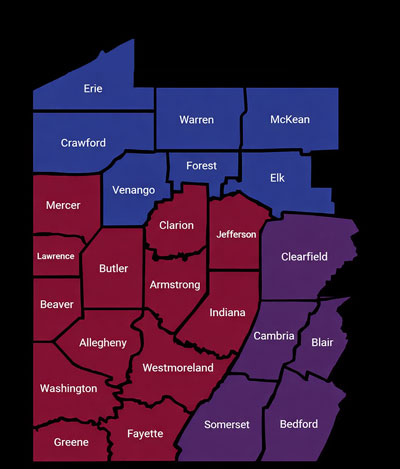
Kennedy Law represents employees across Pittsburgh and Western Pennsylvania who have experienced sexual assault at work. Attorney Nicholas Kennedy combines strong legal knowledge with genuine personal attention, and he will listen to what happened, explain your rights under Pennsylvania and federal law, and help you decide the path forward on your terms.
Kennedy Law helps employees who were sexually assaulted at work pursue every form of accountability the law allows.
That includes tort claims against the individual responsible, employment claims against the company, guidance through the EEOC and PHRC process, protection from retaliation, and coordination with any related criminal matter.
The sections below explain what workplace sexual assault is, how it differs from harassment, and how Pennsylvania and federal law can hold employers responsible.
Sexual assault involves unwanted sexual contact that occurs without freely given consent. When it happens at work, or is committed by someone connected to your work, it can take many forms, including:
Unwanted touching, groping, or grabbing
Forced kissing or physical contact of a sexual nature
Sexual contact obtained through pressure, coercion, intimidation, or abuse of authority
Sexual contact while you were incapacitated or unable to consent
Rape or attempted rape
The person who assaulted you may have been a supervisor, a coworker, or a non-employee such as a customer, client, patient, or vendor.
It may have happened at the worksite, at a company event, on a business trip, or anywhere else your job placed you. What matters is that it happened without your consent.
There is no “right” way to respond to an assault. Some people freeze. Some comply to stay safe. Some do not report it for months or years. None of that changes what happened.
Sexual assault and sexual harassment often overlap, but they are not the same.
Sexual assault specifically refers to unwanted physical sexual contact.
Sexual harassment is a broad category of unwelcome, sex-based conduct that can include sexual assault but also covers non-physical conduct, such as comments, advances, and messages.
Many workplace sexual assault cases also involve harassment before or after the assault itself, such as escalating comments, unwanted advances that were reported and ignored, or retaliation after the employee came forward.
Kennedy Law evaluates the full picture, because the surrounding conduct often determines what your employer knew and when they should have acted.

In many situations, yes. The person who assaulted you is responsible for their own conduct, but Pennsylvania and federal law may also hold your employer legally accountable when the assault is connected to the workplace. Depending on the facts, potential claims include:
Employers cannot look the other way. When a company ignores warning signs or protects an assailant instead of its employees, the law provides a path to hold that company accountable.
Yes. Sexual harassment is a broad category of unwelcome sex-based conduct, while sexual assault involves unwanted physical sexual contact and is a crime. The two often occur together, and a single situation can support both types of claims.
Potentially. If your employer knew or should have known about the risk, ignored prior complaints, failed to investigate, or retaliated against you for reporting, the company itself may be liable alongside the individual who assaulted you.
No. A police report can be helpful evidence, but it is not required. Civil claims are separate from the criminal system, and you can pursue them whether or not charges were ever filed.
Location is not the deciding factor. Assaults at company events, conferences, business trips, client sites, or anywhere else connected to your employment can still support workplace claims.
That does not disqualify you. Freezing, complying to stay safe, and delayed reporting are all well-documented trauma responses. What matters legally is that the contact was unwanted, not how you reacted in the moment.
No. The law prohibits employers from punishing employees for reporting sexual misconduct or participating in an investigation. If retaliation happens anyway, it becomes a separate claim with its own remedies.
It depends on the claim. Employment charges must typically be filed with the EEOC or PHRC within months of the conduct, while civil claims carry their own statutes of limitations. Acting quickly protects both your rights and your evidence.
An attorney can assess every available claim, preserve evidence, handle agency filings, deal with your employer so you do not have to, and advocate for full compensation, including lost wages, emotional distress damages, and other relief allowed by law. Just as importantly, an attorney can shoulder the process so you can focus on moving forward.
If you were sexually assaulted at work, what happened to you matters, and the law gives you options.
Kennedy Law is here to listen, to investigate, and to help you hold every responsible party accountable.
Contact us today to schedule a free and confidential consultation with a Pittsburgh workplace sexual assault lawyer who will take your story seriously: (412) 212-6465.